A Best two step prop firm primarily looks into how well a trader can keep up consistency, discipline, and risk control properly throughout the two evaluation phases. It is not simply about achieving the profit targets but more about demonstrating stable performance over time. Here, swing trading vs day trading is becoming a major factor as the trader’s decision directly influences his/her reaction to stress. However, choosing a “perfect” strategy is not the main focus in a Best two step prop firm; instead, it’s all about a choice that leads to consistency.
WHAT A BEST TWO STEP PROP FIRM REQUIRES
Typically, a Best two step prop firm challenge involves two phases. First phase is for the traders to reach a profit target while not exceeding the allowed drawdown limits. Second phase ensures that the trader is capable of producing the same results without violating the risk rules. Such a setting gets rid of traders who trade emotionally and gives rewards to those who can handle capital correctly. Occasional large wins matter less than consistency, and that is the point where the choice of strategy comes into play.
UNDERSTANDING SWING TRADING VS DAY TRADING
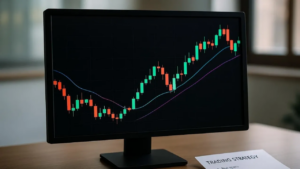
Swing trading vs day trading are actually two different types of market interactions. Day trading is to make trades whose opening and closing times are within the same day. Trader’s quick decision making and their ability to make emotional decisions under stress are key factors in this type of trading. Oppositely, swing trading is about holding the trades for more than a day, sometimes for several days or weeks. It is more about focusing on larger time frames, being patient, and making fewer trades that capture bigger market movements. Both methods can be compatible with a Best two step prop firm, however, they depend on the trader’s state of mind differently in terms of producing consistency.
DAY TRADING AND CONSISTENCY IN PROP FIRMS
Day trading can become a good method to a Best two step prop firm as it generates many opportunities. Traders can make quick decisions and respond to the market changes right in the same session. Nevertheless, consistency is hard to maintain when there is a lack of discipline. Performing too many trades, making decisions based on emotions, and even counteracting the losses with reckless trades are things that can ruin your performance. Professional day traders usually establish a well-documented trading plan, impose restrictions on the number of daily trades, and pay attention only to the best trading setups. One can expect unstable results in day trading without discipline.
SWING TRADING AND CONSISTENCY IN PROP FIRMS
Swing trading is generally seen as more consistent and therefore suitable for a Best two step prop firm. The longer holding period of the trades receive less emphasis on time pressure. It also makes it possible for the trader to not respond immediately to the emotions and be more focused on the long-term trading setups. Lesser number of trades, in turn, means lesser number of potential mistakes. On the other hand, swing trading demands a lot of patience. The decision to keep the trades unaffected by market movements might be highly challenging, especially if the trades result in temporary drawdown. If swing trading is done right, it can maintain steady equity lines and consistent performance.
RISK MANAGEMENT AND ITS ROLE IN BOTH STYLES
Risk management is absolutely vital when comparing swing trading and day trading, especially for a Best two step prop firm. Day trading risk is controlled mainly by the number of trades and stop loss limits. Swing trading risk is controlled by trade size and detailed trade planning. In fact, both trading styles need to keep drawdown under a certain limit and not expose themselves to too much risk. Without proper risk control, even the best strategy can fail. Consistency is always a result of capital preservation, not of profit maximization.
PSYCHOLOGY AND DISCIPLINE FACTOR
Indeed, psychology is a big factor behind consistency. Day traders feel the pressure from making decisions so fast but swing traders experience the pressure that stems from waiting and the unknown. Emotional control is greater than strategy in a Best two step prop firm. Those traders who let their emotions get the better of them tend to break the rules and end up losing their consistency. The very best traders, those with the most consistent profits over time, are the ones that are disciplined to the point where they are simply following their plan and not making any impulsive or emotional decisions.
WHICH STRATEGY IS BETTER FOR CONSISTENCY
When it comes to swing trading vs day trading, swing trading is typically the most consistent method for most beginners in a Best two step prop firm simply because it minimizes the risk of emotional decisions and overtrading. That said, master traders who are very disciplined can still be consistent at day trading. The fundamental factor separating the two is not the technique, but rather the execution of it. Ultimately, consistency has a lot to do with one’s behavior rather than the type of trading style.
COMMON MISTAKES THAT BREAK CONSISTENCY
One common mistake is abruptly switching between swing trading and day trading without making a clear plan which results in uneven results and evaluation failure. Another issue is making the mistake of increasing the risk exposure after winning a few trades which totally destabilizes the position. Day traders who overtrade or swing traders who hold losing trades for too long also lose their consistency. In a Best two step prop firm, deviating from the plan is even more harmful than having a poor strategy.
CONCLUSION: CONSISTENCY WINS PROP FIRM CHALLENGES
A Best two step prop firm wants to identify and reward the trader who is consistently performing well for a period of time. When it comes to swing trading vs day trading, either trading method can do well if the trader is disciplined and uses it correctly. Nonetheless, consistency is a result of risk management, emotional balance, and a well-organized execution rather than the trading style itself. Those traders who remain calm and patient, stick to their rules, and do proper risk management are going to be the ones who not only pass the challenges but develop success over the long term in a funded trading environment.